
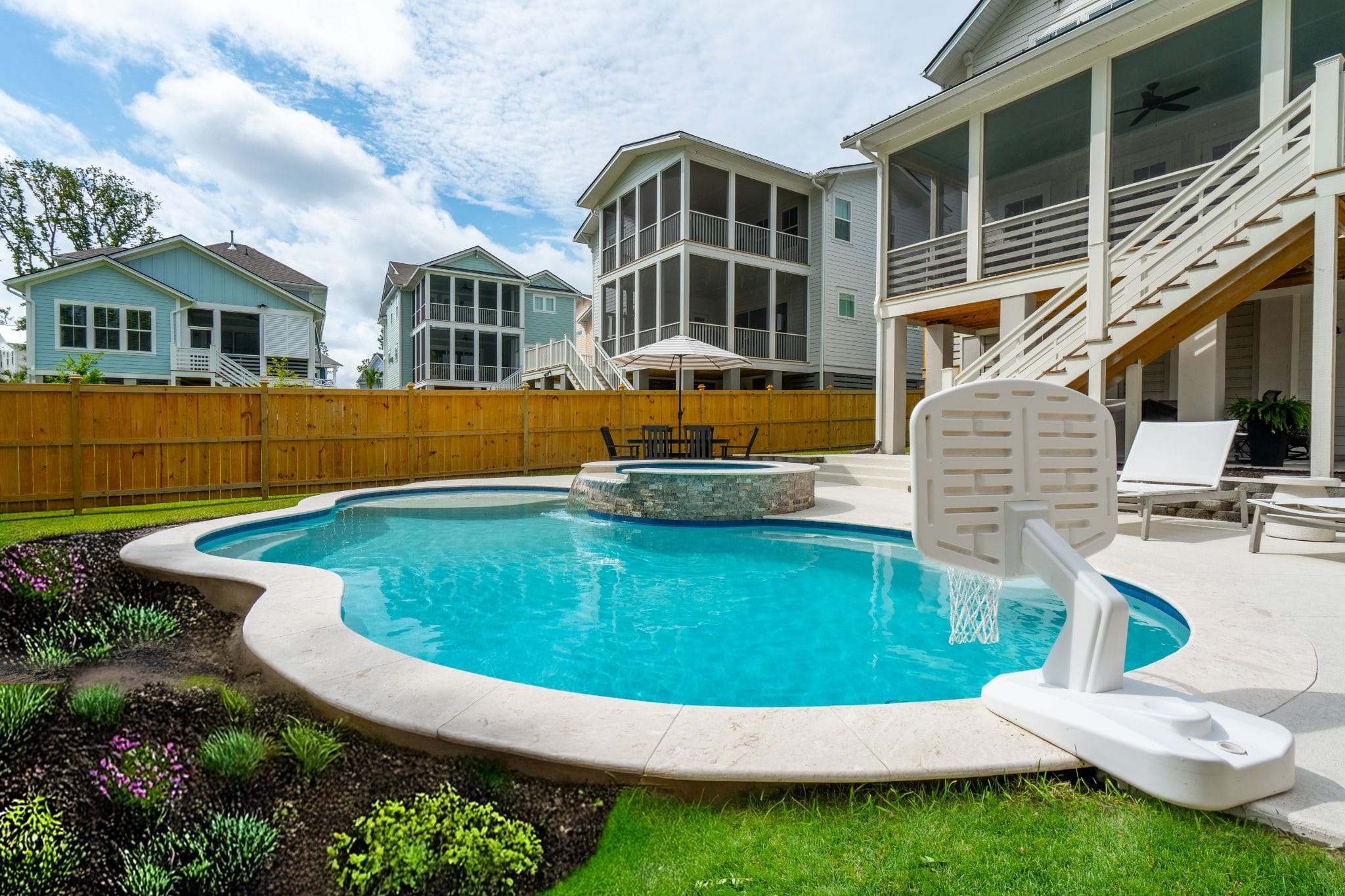
You may have heard the term “gunite pool construction” or “concrete pool construction” before. The reason is that gunite pools are some of the longest-lasting, customizable pools in the industry. They’re a top choice for prospective pool owners.
Gunite pool construction refers to the process by which concrete is used to shape a rock-solid, functional swimming pool. Pool construction teams often use concrete for luxury backyard pools because concrete can adhere to any surface.
The combination of high pressure, dry concrete, and water, also known as gunite, is one of the longest-lasting, most durable substances on which to build an attractive, yet customizable pool. Using gunite and concrete to build a pool matters, because it allows custom inground pool builders to build any shape or size pool that you can imagine.
Plus, gunite pools are some of the longest-lasting pools on the market. Curious to learn what a gunite pool can do for you?
If you’ve been thinking about building a gunite or concrete pool, look no further.
Legacy Pools here. In this article, we’ll walk you through everything you need to know about gunite pool construction for backyard swimming pools, including:
- What is gunite pool construction
- How gunite or concrete pool construction works
- How long gunite pool construction takes
- Factors that affect the cost of gunite pool construction
- Benefits of building a concrete or gunite pool
- Comparing gunite and concrete pools to other types of pools
- How to know if a gunite or concrete pool is right for you
- Frequently asked questions about gunite and concrete pools
What is gunite pool construction?
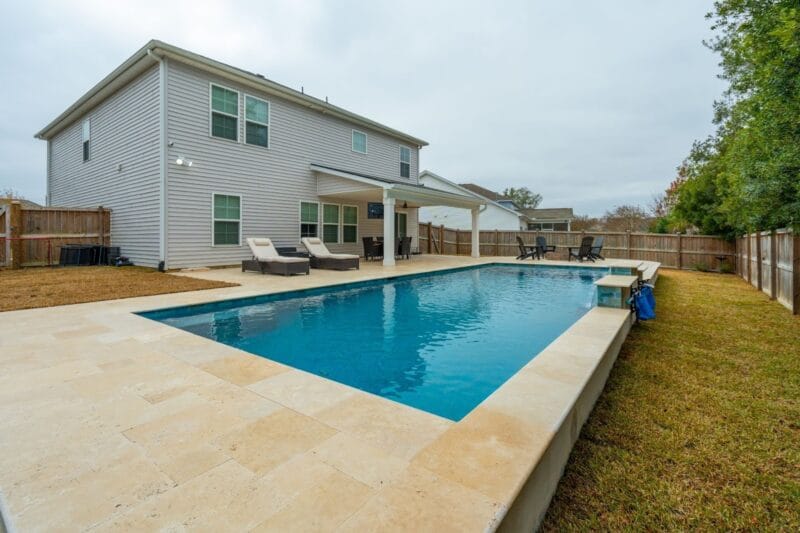
Gunite pool construction refers to pools that are built using gunite. Gunite is a type of concrete mix consisting of cement, sand, and water.
The difference between gunite and other forms of concrete is the way that gunite is used. Gunite is mixed dry and sprayed through a high-pressure hose, where water is added at the nozzle, over a steel rebar framework.
Spraying gunite allows for greater control and flexibility, making it ideal for creating pools of all different shapes, sizes, designs, and features. Gunite pools tend to be popular for custom pool shaping and high-end luxury pool builds.
What’s more, they offer more flexibility and customization than fiberglass pools, vinyl pools, or any other pool option.
How the gunite pool construction process works
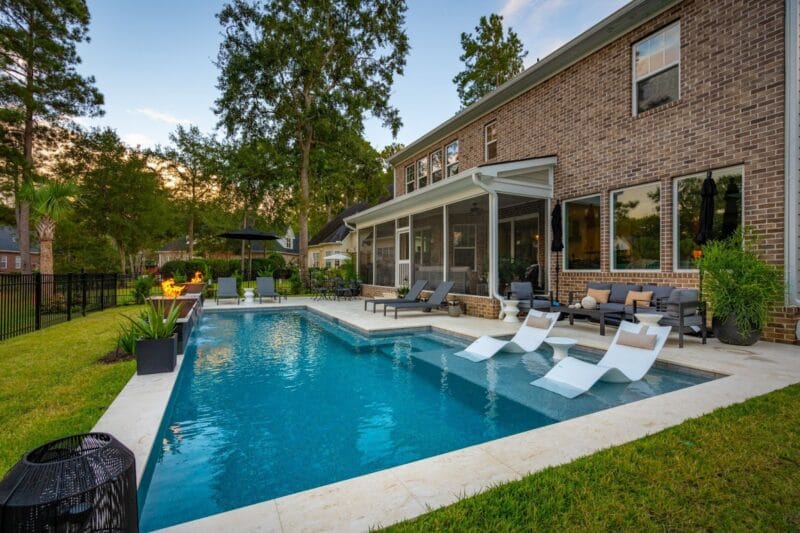
Gunite pool construction refers to more than just shaping a pool with gunite concrete. The process involves 10 steps:
- Site planning and design: Together with your gunite/concrete pool builder, you’ll choose your design, the elevation of the pool will be set, and grading and retaining wall work will be determined.
- Excavation: We set our dirt grade right and begin hand-shaping the sides of the entire pool to ensure uniform consistency of gunite and concrete around the pool.
- Install stone base: We add stone to the bottom of every pool with hydrostatic plugs, which are inserted into the drains and extend through the bottom of the pool.
- Plumbing and equipment: We fix the plumbing system with air from a compressor to ensure no leaks occur. We do the plumbing and electrical conduits in the same trench with the plumbing, so everything is installed in one place and the likelihood of damage is minimized.
- Steel rebar installation: The entire pool is caged in steel rebar and uses a bond beam to handle cold temperatures.
- Gunite time: Two types of concrete are used, either shotcrete or gunite. Shotcrete is a wet mix of concrete, and gunite is a dry mix. Once the concrete is shot around the perimeter of the pool, we wet down the entire shell for seven days, helping the gunite to cure to its highest and strongest pressure potential..
- Tile and coping: Prior to tile and coping, you’ve stopped by our Legacy Pools showroom to pick your preferred tile and coping. We cut every coping brick to make a uniform joint around the perimeter of the pool.
- Pour deck: We include decking, install joints, and pour concrete per your plan to install the deck around your pool.
- Regrade topsoil: The deck is complete, which means we now respread the topsoil that we stripped at the beginning of our work. We rake the topsoil, and, should you wish, spread seed so you can grow grass around your pool space.
- Plaster and fill: One of the final processes is finishing the plaster. We finish the coat on the inside of your pool. Once the plaster is complete, it’ll be filled the same day. Finally, we adjust the water chemistry so it’s balanced and swim-ready, conduct final inspections, and then you’re free to enjoy your brand new backyard pool!
Each step progresses more quickly or slower depending on the size, shape, and complexity of your build. Nevertheless, a dedicated project manager will be with you from start to finish to ensure timelines go off without a hitch.
How long does gunite pool construction take?
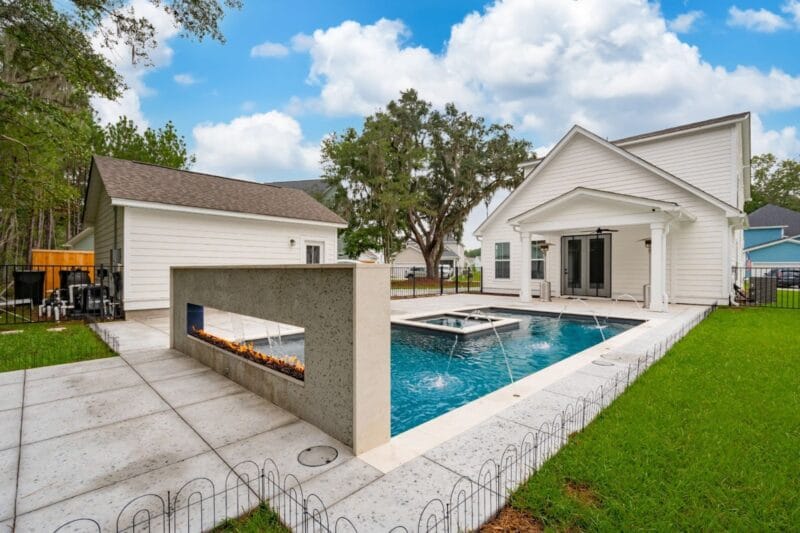
From start to finish — everything from site planning to permitting to excavation to framing to crafting the gunite shell and letting it cure, to decking, landscaping, and finishing touches — most gunite pools are completed in three to six months.
The tricky question of “how long does it take?” depends on the design complexity, permitting, weather, site conditions, and the type of finish selections you choose. Ultimately, custom pools tend to take longer than other types of pool installations because more detail and time go into crafting a gunite pool.
Nevertheless, if you have a specific timeframe in mind, your pool builder will work with you to achieve your goal.
What factors affect the cost of gunite pool construction?
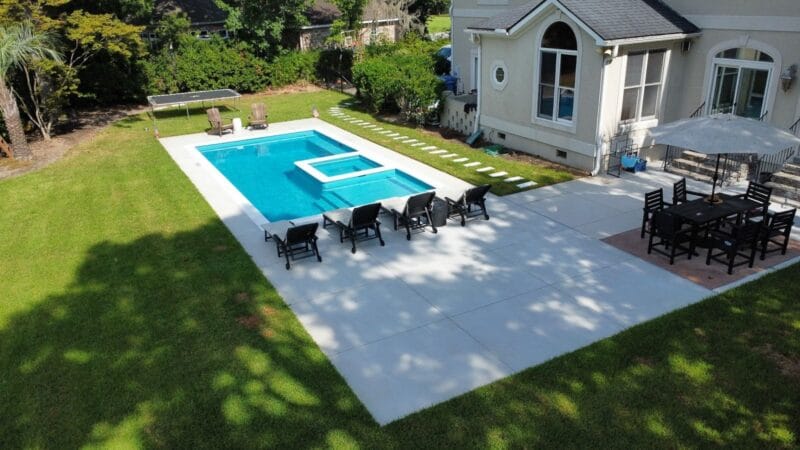
Many people ask us about the cost of gunite pools. The cost will often depend on the type of service provided. For example, the following factors can affect the cost of a gunite or concrete pool build:
- The size of the pool
- The complexity of its shape
- The conditions needed to access the pool (Some backyards are more remote than others; extra preparation is needed to be able to access it)
- The condition of the soil
- Added features (such as tanning ledges, spas, waterfalls, fire bowls, LED lighting, scuppers, and more)
- Decking, backyard landscaping, and outdoor structures added around the pool
- Local permitting and engineering
Benefits of gunite swimming pool construction

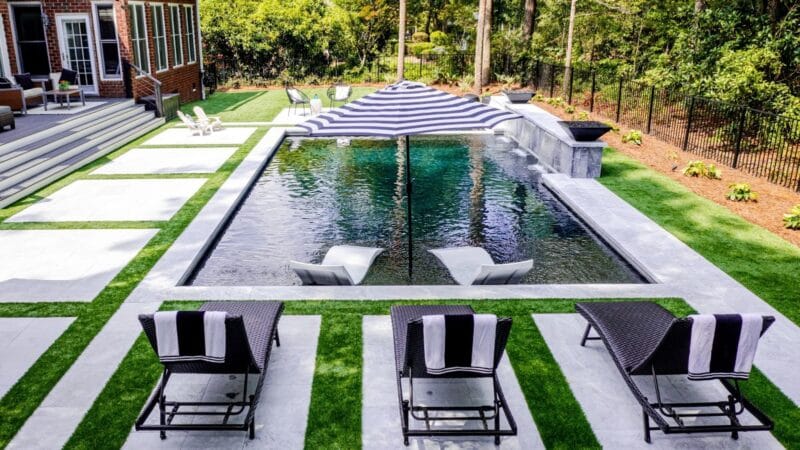
Some of the most significant benefits of building or remodeling a concrete or gunite pool involve the flexibility and customizability of the build. Gunite pools offer:
- Unsurpassed design flexibility
- Rock-solid, long-term durability
- Clean aesthetics that complement a high-end luxury home
- Tailor-made turn-key solution that’s built for unique backyards and outdoor living arrangements
- A broad spectrum of integrated features
- Option to design custom pool depths
Best of all, they’re one of the longest-lasting pools on the market. If you maintain it right, a gunite pool may be the only pool you ever build in your lifetime.
Are there any downsides to gunite pools?
Like any large home investment, downsides exist. The downsides of building gunite or concrete pools revolve around cost and time.
- Concrete and gunite pools tend to require a higher upfront cost versus fiberglass or vinyl liner pools
- Compared to prefabricated pools, gunite pools tend to take longer to build
- More time and resources are needed to maintain the surface of a gunite pool
- Not every homeowner needs the level of customization that concrete and gunite pools offer
In return, you’ll receive a pool that lasts longer and offers endless customization. Before building your new backyard pool, we always recommend doing your research so you can determine which pool is best for you.
Gunite vs. fiberglass vs. other pool types
Speaking of other pools, other pool options include fiberglass pools and vinyl liner pools. When comparing gunite versus fiberglass pools versus vinyl liner pools, the following table helps illustrate the advantages and disadvantages of each.
| Feature | Gunite Pool | Fiberglass Pool | Vinyl Liner Pool |
| Customizability | Highly customizable in shape, size, and depth | Limited customization because they’re made with pre-formed shells | Customizable in size and shape, but limited in design |
| Design options | Wide range of design options that can be designed to fit any landscape | Pre-designed shapes; some customization is available | Standard shapes; custom designs available but less flexible than gunite |
| Durability | Extremely durable and can last 50+ years with proper care | Durable, but can be damaged by sharp objects or extreme weather; they last around 25-30 years | Less durable; typically lasts 10-15 years, but the liner will need replacing |
| Cost efficiency | High initial cost, but high long-term value | Medium cost, moderate to high long-term value | Lower upfront cost, but can incur extra costs to replace the liner |
| Maintenance | Requires regular maintenance, especially for maintaining the surface of the pool | Low maintenance, and it’s easy to clean | Requires regular maintenance; you’ll need to replace the liner every 10-15 years |
| Resale value | High resale value due to longevity and aesthetic appeal | Moderate resale value; less customizable appeal | Lower resale value due to the need for liner replacements and regular maintenance |
| Energy efficiency | Can be energy-efficient with proper heating and insulation | Tends to be more energy-efficient due to its smooth surface and heating capabilities | Less energy-efficient due to rough surface and potential heat loss. |
| Yearly cost of ownership | Medium to high cost, considering energy, chemicals, and maintenance. | Low to medium, because it doesn’t require as much maintenance | Low to medium, but costs for liner replacements can add up over time |
| Custom shapes and sizes | Highly customizable | Limited customization; only specific sizes and shapes are available | Can be customized, but flexibility is not as much as with gunite or concrete pools |
| Chemicals needed | Requires regular chemical balancing, especially for pH and chlorine. | Requires some chemical balancing, but a smoother surface reduces the need for chemicals | Similar chemical needs as gunite/concrete pools, but the liner can affect chemical usage |
Did you know?
Did you know that once your pool is complete, your pool builder will provide complimentary tutorials on how to use it?
That’s how we work here at Legacy Pools. Welcome to Pool School.
Pool School? Yup.
Pool school is where we teach you how to use and care for your pool. We show you the ins and outs of all of your equipment, your pool control app, and answer any questions you’ve got on how to use everything and continue to maintain it.
A new pool and the chops to maintain it: what more can you ask for?
Check out Pool School in action, along with other helpful tips for building and maintaining your backyard pool on our Instagram page.👈🏼
Is gunite pool construction right for you?
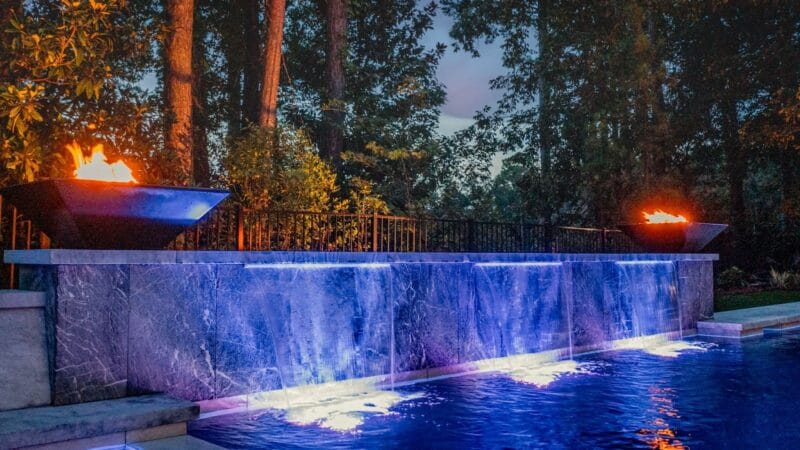
Ultimately, gunite and concrete pools are best for homeowners looking for a custom-sized and shaped pool, complete with extra features. It’s a strong option for those who want to revamp their backyard for luxury living.
If you’re looking to make a lucrative long-term investment that’ll pay dividends on your home’s resale value, a gunite pool installation might be just what you’ve been looking for. Our pool contractors can help you narrow down your choice depending on your goals, budget, and preferred building timeline.
If you’ve been considering an upgrade for your home, now’s the perfect time to get started on your new 60-day gunite pool build. For more information about the gunite construction process, including which construction method fits your yard, budget, and goals, don’t hesitate to contact us today.
A pool specialist on our team would be happy to walk you through your options. Until then, all the best to you, and we look forward to helping you realize your vision for your new backyard pool.
Frequently asked questions (FAQ) about gunite pool construction
1. How long does gunite pool construction take?
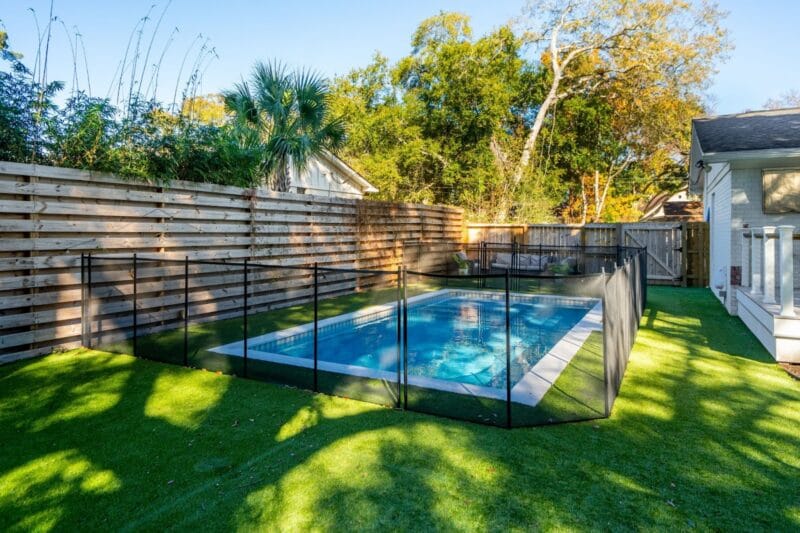
Gunite pool construction can take anywhere from three to six months from design to completion. With that being said, some pools can be built in 60 days or less, after preliminary planning is complete.
2. Are gunite pools better than fiberglass pools?
The short answer: not necessarily. The longer answer: both gunite and fiberglass pools offer different advantages and disadvantages.
Gunite pools tend to be longer-lasting and more customizable, but require more maintenance and a higher upfront investment. Fiberglass pools tend not to last as long and aren’t as customizable, but tend to be more affordable and require less maintenance.
What’s more, gunite and concrete pools are particularly suited for those looking to upgrade their backyard’s aesthetic.
3. What are the steps in gunite pool construction?
Gunite pool construction tends to follow a step-by-step construction process that includes the following:
- Design, layout, and elevation set-up
- Strip the topsoil
- Excavate the pool and pour the filter pad
- Install a stone base (that is, if the pool will regularly be exposed to cooler temperatures)
- Install plumbing, electricity, and equipment
- Install steel rebar framework
- Shoot gunite or shotcrete concrete on the steel rebar
- Install tile, coping, and decking
- Regrade the topsoil
- Plaster and fill the pool
4. Are gunite pools durable?
Absolutely. Gunite pools can last up to 50+ years if given proper care and maintenance.
They’re extremely durable because they’re constructed in layers. The first layer is the steel grid and plumbing, the second layer includes the gunite (which includes cement, water, and sand), and the third layer is the tile and coping.
5. How much does gunite pool construction cost?
Gunite pool construction tends to cost anywhere from $65,000 and $120,000 or more, depending on the size, shape, and added features of the pool. Some pools can cost less than $65,000.
At the end of the day, the total cost depends on the complexity of the build.