
You’re looking to build a custom pool, and a close friend mentioned concrete pool installations. How do they differ from non-concrete pool installs? What does it take to build a concrete pool? You might be wondering.
If you’re thinking about building a concrete pool, you’ve come to the right place. Legacy Pools here.
For nearly a decade, we’ve been building, installing, and remodeling luxurious concrete, gunite, and shotcrete pools across South Carolina.
In this article, we’ll walk you through what’s involved with concrete pool installations, including:
- The process of installing concrete pools, as well as the materials used to do so
- How to build a concrete pool in eight straightforward steps
- Common problems that occur when building a concrete pool, do-it-yourself (DIY) style
- Maintenance tips for caring for a concrete pool
- Acid washing a concrete pool
- Concrete pool resurfacing
- The cost of concrete gunite pool construction versus vinyl liner and fiberglass pool installations
- Where to start if you’re thinking about installing a concrete pool
- Frequently asked questions related to custom pool construction
Materials used in concrete pool construction
Whether you’re building a concrete pool on your own or hiring an expert pool contractor, you’ll need the right tools and materials for the job. With that being said, here are 13 common tools you’ll need to install your concrete/ gunite pool.
- Excavators and shovels for digging the hole in your ground
- Levelers and poles
- Rakes
- Ropes and string
- Steel rebar for the frame of the pool
- Metal ties
- Piping and plumbing equipment for water flow purposes
- Concrete, shotcrete, and gunite equipment
- Straight edge and trowel
- Waterproofing materials
- Plaster
- Coping, tiling, and decking
- Hand tools
While other equipment is needed, these are the most common pieces of equipment needed to build a pool. Buyer beware: if you plan to build your pool on your own, know that this will be a heavy expense.
Consider hiring a pool pro to help with building your pool, as embarking on a DIY build can be a real challenge. A pool professional has the experience, the materials, and the tools to get you started right away on your new pool build.
How to build a concrete pool (8 steps)
Whether you decide to build your pool or rely on a trusted pool contractor, we always recommend securing your pool permit and finalized pool design before building an in-ground pool. Once you have these steps, follow these eight straightforward steps.
| 1. Excavate the hole in your backyard where your pool will sit 2. Build your pool’s steel rebar grid 3. Plumb and wire the pool 4. Fill the pool with concrete 5. Waterproof the pool and install the tiling in it 6. Install the coping and decking around the pool 7. Surface and plaster the pool 8. Begin the start-up process |
1. Excavate a hole for the pool
In preparation for excavation, you’ll need your permit, pool design, and an inspection to ensure your build won’t run into a utility line. You’ll also need an excavator, which can be rented and operated by a contractor.
You’ll also need a plan as to where you want the dirt on your property to be taken, that is, if you don’t have anywhere to place it once it’s dug up from your property. Finally, you’ll rake the bottom and sides of the pool and ensure it’s level.
Along the way, mark everything with stakes and string to ensure the pool stays level. Once you do, you’re ready to move on to building the steel rebar grid.
2. Build a rebar grid
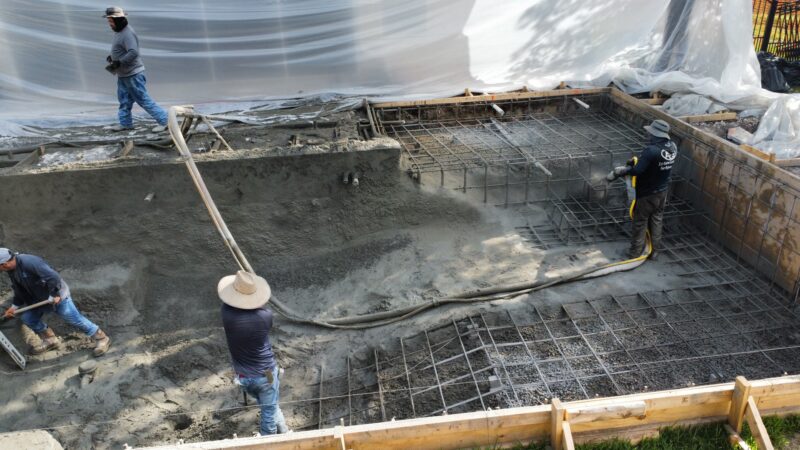
Now that the hole is dug and level, the next step is to build a steel rebar grid across the pool and tie it together with metal ties. If you’re installing a concrete pool on your own, you shouldn’t skip this step.
Why? The steel rebar gives your pool its strength, which helps keep your pool safe from unnecessary damage.
Without the rebar grid, a pool loses its structural strength, leaving it susceptible to cracking and shifting over time.
3. Plumb and wire the pool
Now that the steel rebar grid is in solid shape, lay the plumbing pipes so that water and chemicals can circulate throughout your pool. Cap the openings so the pipes don’t clog with concrete (a topic we’ll address in the next section).
You’ll also wire the plumbing pipes to the pump and filter system. If you’re choosing to install your gunite pool on your own, we recommend hiring a plumber to verify that everything is done correctly.
During this step in the installation process, you’ll want to wire and bond any conductive parts in and around a swimming pool, such as the filtration system, lights, and any pieces of equipment that require a power source.
4. Fill the pool with concrete
This is one of the most challenging parts of the process. When preparing your concrete (or shotcrete or gunite), it’s sprayed out of a large hose on the bottom and sides of the pool.
You’ll want to be very careful about filling the pool with concrete at this point. Otherwise, you can always hire a pool contractor whose “nozzle” personnel have the expertise and knowledge to effectively spray the gunite or shotcrete concrete onto the steel rebar frame.
If choosing to spray concrete yourself, the concrete should be about six inches thick on all sides of the pool. Once the concrete is applied to the rebar frame, you’ll need to form the floor and walls by smoothing them out with trowels and other concrete-friendly tools.
Then, the waiting game begins. Before you can continue installing your pool, you must wait for the concrete to cure. The curing process can take about 28 days.
As such, during this process, you’ll need to spray the surface of your pool with water about two to three times per day to ensure consistent, strong curing.
5. Waterproof the pool and install tiling
We’re officially halfway through the concrete in-ground swimming pool installation process. The next half of the installation process involves the finer details of the pool.
Now that the structure of the pool is prepared, you’ll need to waterproof it by rolling and/or spraying on sealant. After sealant is applied, you can surface your pool.
Doing so prevents water from permeating through the structure. What’s more, most luxury pool contractors apply waterline tile along the top six inches of the pool to prevent staining where the edge of the water makes contact with the pool surface.
While waterproofing your pool, you’ll be able to customize your pool with quality finishes, colors, and designs. Waterproofing isn’t mandatory, but doing so can help you safeguard the health and longevity of your pool.
6. Install the coping and deck area
Next, we install the coping and deck. The coping is the space at the edge of the pool that connects to the rest of the deck.
Coping materials include:
- Concrete
- Brick
- Pavers
- Stone
- And more
After installing the coping, decking comes next. Decking materials include:
- Natural stone
- Wood
- Brick
- Pavers
- Travertine
7. Surface and plaster the concrete pool
Surfacing a pool helps keep it smooth and comfortable for swimmers. When choosing the surface and plaster material of a concrete pool, you’ll have options, such as:
- Pebble Tec
- Plaster
- Tiling
- Epoxy paints
- And more
A wet plaster mix is projected from a nozzle onto a pool’s surface, smoothed out with a trowel, and left to cure.
8. Start it up
Starting the pool up? That seems easy to do.
Not so fast: while this stage may seem brief and simple, you’ll need to wait for your plaster to cure for another four weeks or so. While you’re waiting for your plaster to cure, and in anticipation of starting the pool up, here’s what you can do next:
- Balance your water with chemicals: To prevent stains on fresh plaster, ensure that chlorine isn’t introduced for at least two days after plastering.
- Brush your pool at least twice a day for 10 days: You must brush your pool at least twice a day to remove any dust kicked up from the plaster.
- Once plaster dust is gone, start up your pool heater: You can start swimming only after your water is sanitized and chemicals are balanced.
If in doubt during any part of this process, we always recommend reaching out to a licensed and insured pool construction team to ensure your pool project goes off without a hitch.
DIY concrete pool problems
So, we’ve discussed how a concrete pool build looks, step by step. With that being said, sometimes you’ll run into delays when building your pool. A few problems you might encounter when building a concrete pool on your own include:
- Building delays due to inclement weather
- Schedule delays due to subcontracted work
- DIY concrete pool construction doesn’t guarantee you’ll have a warranty, which means if something goes awry, you’re responsible.
- Concrete can be messy, so your yard may look more like a warzone than a cozy entertainment space.
- Plumbing issues, such as improper bonding or pipe fitting, can also occur.
- Applying a thin layer of concrete (or an overly thick layer) is also a common pool construction issue.
Maintenance tips for concrete pools
Assuming you’ve taken the time and care to complete your pool installation according to best practices, first, give yourself a huge pat on the back.
Your next step is learning to maintain your pool. To ensure your new pool stays clean and durable, it’ll need weekly maintenance. Weekly maintenance includes:
- Checking and balancing chemicals at least once per week
- Brushing your pool’s surface with a steel brush to remove debris and algae
- Cleaning your pool on the regular
- Running your filter daily
In addition, every five years or so, you’ll need to acid wash your pool. Acid washing helps remove the algae, dirt, and debris that tends to form on the surface and plaster of the pool. With that being said, each time you acid wash your pool, you’ll remove a thin layer of the plaster, in addition to the debris.
Acid washing requires you to refill your pool, replenish your chemicals, and clean the surface, a process which requires significant attention to detail.
Concrete pool resurfacing
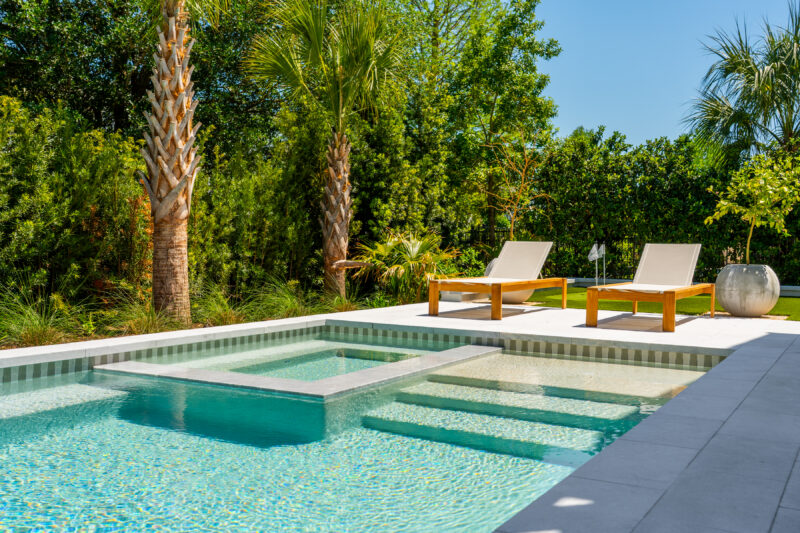
Given that acid washing strips a bit of a pool’s plaster away, one way to keep the plaster fresh is by resurfacing a pool. Resurfacing a pool every 10 years helps you refresh your pool’s plaster, aggregate, and tile.
Plaster costs about $3.50 and up per square foot of the pool’s internal surface area, whereas aggregate costs about $4.75 and up per square foot. Finally, luxury glass tile costs about $30 and up per square foot. Given that every municipal area charges a different rate, we recommend researching your city to determine whether to hire a professional pool resurfacing team or resurface your pool on your own.
The cost of a gunite/ concrete pool versus fiberglass pools versus vinyl liner pools
Now that we’ve reviewed the process of installing a concrete pool, the question many people ask us is, “What type of pool is best for me then?”
The three main types of backyard pools include:
- Concrete pools made from gunite or shotcrete concrete.
- Fiberglass pools
- Vinyl liner pools
In general, if you’re looking for complete freedom over the customization and design of your pool, concrete pools are your best bet. What’s more, if you’re looking for a pool that installs faster and requires less maintenance, but won’t last as long as a concrete pool, fiberglass pools are your best bet.
Finally, vinyl liner pools are the most budget-friendly of the bunch, but they’re not often as durable or long-lasting as fiberglass or concrete pools.
As such, concrete pools tend to cost the most, with fiberglass and vinyl liner pools falling in line behind them.
Quick pool facts that stick like concrete: did you know?
Did you know that forming the concrete shell of a gunite pool takes about five to six hours and that it can even be completed if there’s a bit of a drizzle outside? Curious to see what Gunite Day looks like?
Take a tour of some of our Myrtle Beach, South Carolina-based luxury backyard pool spaces in this quick Instagram reel that showcases Gunite Day.👈🏼
Where to start if you’re thinking about installing a concrete pool
If you’re considering installing an in-ground concrete pool/spa in your backyard, whether through a professional pool contractor or DIY project, the best place to start is by giving a professional pool contractor a call.
By comparing the work needed to install electrical lines, pour concrete, test soil conditions, and build the framework for the gunite pool, for example, with a licensed pool installation team, you’ll have a better understanding of whether you’re prepared to embark on a DIY journey or work with a team.
If you envision a team for this complex project and live in South Carolina, we’d be happy to help. Our Legacy Pools pool contractors in Columbia and Myrtle Beach have installed over 1,500 pools across the Grand Strand, Midlands, and tri-county area — and that’s in the past nine years alone.
Whether you’re looking to build a small cocktail pool or a backyard oasis built for royalty, our team has the skills, experience, and tools to get your pool up and running in 60 days (or less).
To learn more about our approach to concrete pool installations, we invite you to get in contact with us. We look forward to helping you build the backyard pool of your dreams.✨
Frequently asked questions about the cost of backyard in-ground concrete pools
1. How long do concrete pools last?
Concrete pools tend to last 50 years or more, with some pools lasting up to 100 years with regular maintenance and care.
2. What’s the cost of a concrete pool?
The answer depends on where you live. For example, concrete pools cost anywhere from $50,000 to $120,000 depending on which part of the country you’re building.
The cost range is due to added pool features, the area in which people live, and the amount of customization completed on the pool.
3. What are the advantages and disadvantages of a concrete pool?
The advantages of building a concrete pool include:
- Unlimited possibilities for design, customization, and added pool features
- They’re one of the longest-lasting and most durable pools on the market
- They help boost the home’s market value
The disadvantages of a concrete pool include:
- They require a more intensive upfront investment than fiberglass and vinyl liner pools
- They require more maintenance than fiberglass pools