
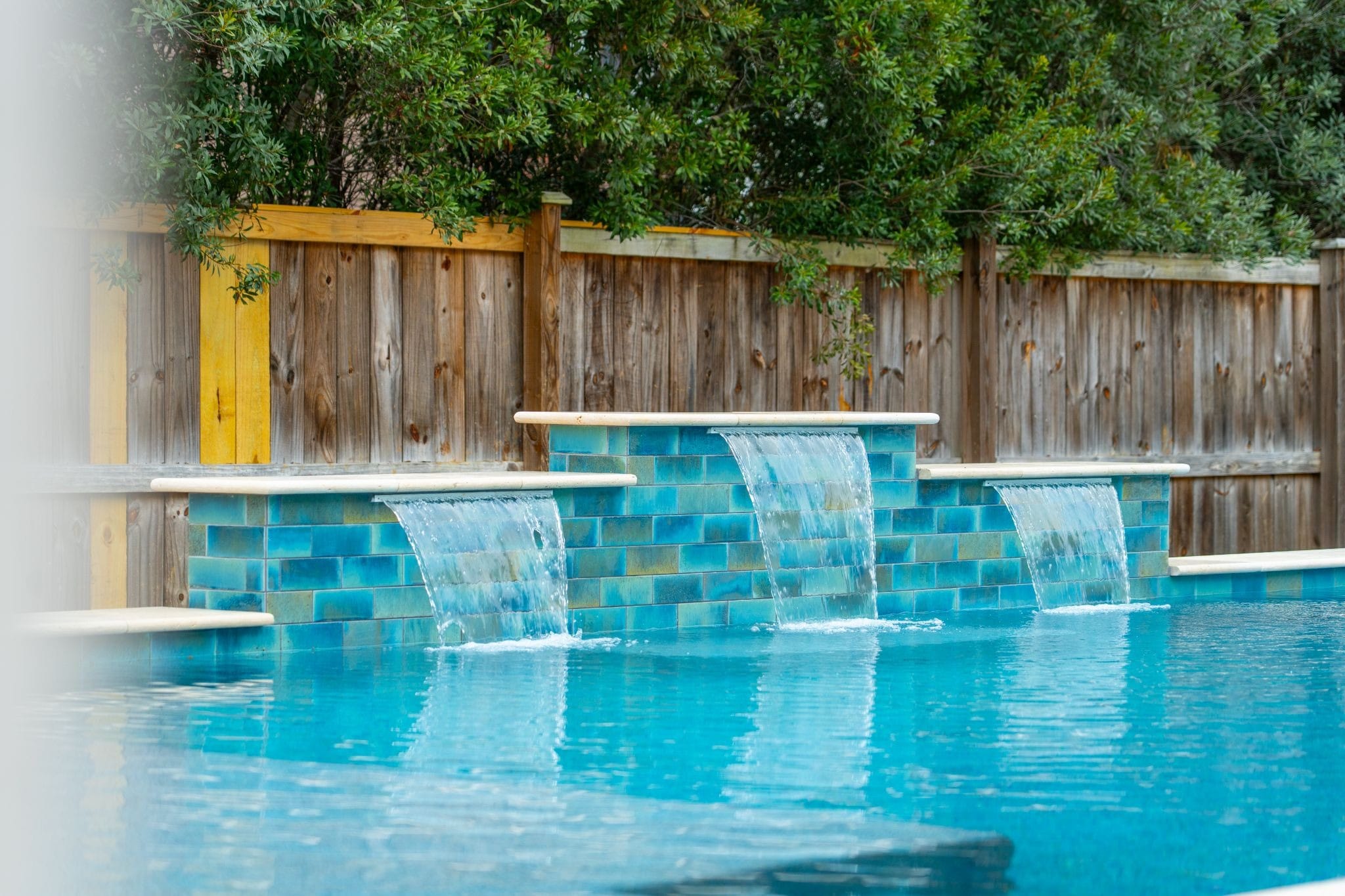
Thinking about a new custom gunite or concrete swimming pool for your backyard? You’ll want to be aware of all the odd ends and pieces involved with gunite pool construction timelines.
There are graders, excavators, Darth Vaders (well, maybe not Darth Vaders), plumbing, electrical, steel, gunite, plaster, and so much more. Since each phase builds upon the last, keeping in mind the overall timeline is mission-critical to staying cool, calm, and in control of your backyard.
We know what it feels like to deal with hassle and stress. That’s why we wrote this article to help you better understand the gunite pool construction process.
If you’re looking for a high-level overview of how long gunite pool construction takes, we’ve got you covered.
In this article, we’ll cover all steps of the gunite pool construction process, including:
- Each phase of the gunite swimming pool construction process
- Factors that can delay gunite pool construction timelines
- Why gunite pools usually take longer than other pool types
- How to plan your pool with timelines in mind
- Why gunite pool builds are worth the time
- Frequently asked questions (FAQ) about gunite pool construction
Let’s jump in.
The phases of gunite pool construction
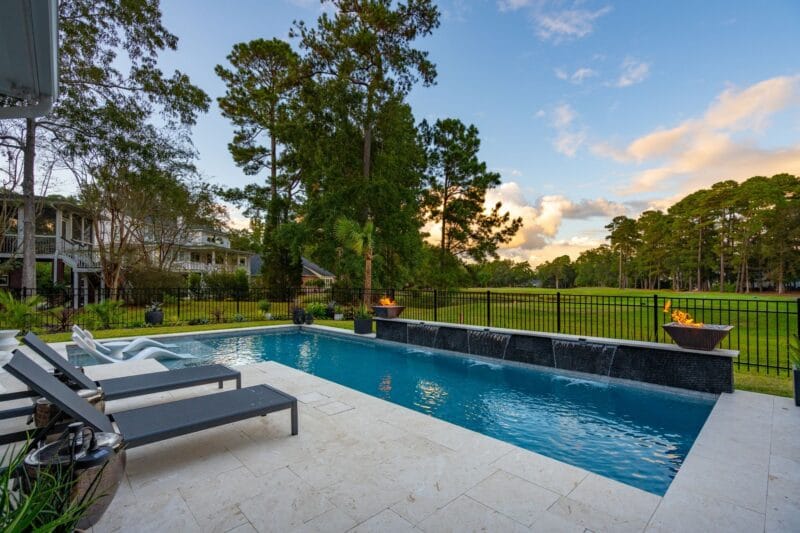
A helpful way to conceptualize the timeline of a gunite pool build is by breaking down each phase. Here’s how the gunite pool construction process looks:
- Pool design phase
- Pool excavation phase
- Steel, plumbing, and the initial electrical phase
- Gunite phase
- Tile and coping phase
- Plaster and the final electrical phase
- Decking phase
- Starting up the pool
We’ll dive into each one (see what we did there?) in greater detail in the following sections.
Pool design phase (about four to eight weeks)
Your pool builder will consider lot size, topography, property line setbacks, easements, and underground utilities as part of the pool design phase.
What’s more, they’ll also help you nail down the following:
- The shape, style, and size of your pool
- Water features, rock displays, or plants near your pool.
- Tile, coping, plaster, and advanced features.
- Pool equipment like ladders, rails, diving boards, and more.
- Heat pumps and heaters
- And more
In the design phase, we lay out your options for pool construction, and together, we choose what feels best for your lifestyle and aesthetic.
Pool excavation phase (about one to four days)
Here’s where we get our hands dirty. In the pool excavation phase, the pool shape is staked out, and perimeter barriers may be removed to give your pool builder access to your backyard.
Excavators and front-end loaders dig out the space for a pool, and in a few hours, you’re able to see the rough shape of your pool in your backyard.
Steel, plumbing, and initial electrical phase (about two to three weeks)
We’ve got the hole, and now we need to reinforce it. In the steel, plumbing, and electrical phase, the hole is reinforced with steel rebar.
The steel rebar holds your pool in place and provides it with the structural support for the pool shell. Oftentimes, while the steel rebar is being shaped, your gunite pool contractor will place skimmers, cleaner lines, drains, and returns in the pool.
At the same time, your electrical team will be connecting bonding wire to the pool shell and hanging pool lights. Towards the end of this phase, we prepare ourselves for one of the most important parts of your pool build: the gunite phase.
Gunite phase (about one day, plus a few weeks to cure)
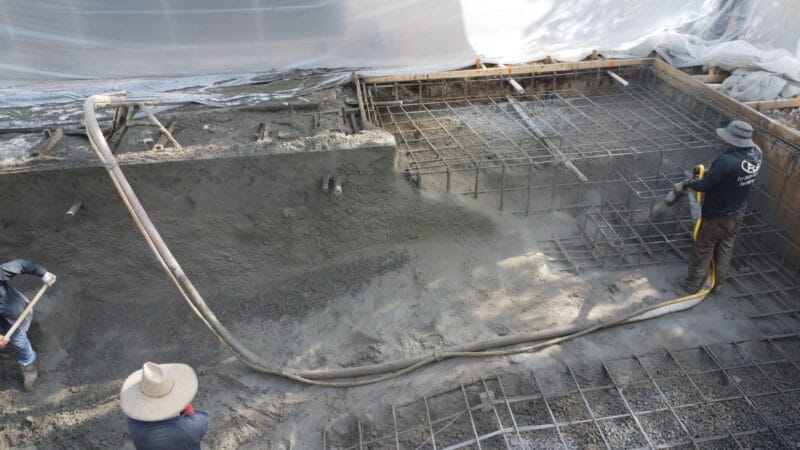
The gunite phase is when your pool is shaped with concrete. Gunite concrete is pushed out with high-velocity air.
The concrete mixture is placed on and behind the steel reinforcement. Gunite cures over several weeks, and eventually, it’ll be covered in plaster to help repair natural, small cracks that might appear in the concrete.
Tile, decking, and coping phase (two days to two weeks)
While the gunite is curing, your pool contractors will set the perimeter tile and pool wall capstones.
Perimeter pool tile helps you maintain cleanable surfaces, and the capstones help with draining water from the pool.
During this phase, the pool deck is also added. Your pool building team will help check that the pool deck doesn’t touch the back of the pool wall, and they’ll ensure freezing water and debris stay out of the pool.
Final electrical phase and plaster phase (two to four days)
We’re almost done here. We promise!
After gunite and/or shotcrete application, after tiling, decking, and coping, your team will install electrical breaker boxes where the pool equipment is set up. During this phase, all electrical outlets and boxes are connected so that all aspects of the pool that require electricity work as they should.
All that’s left is plaster.
Plaster helps keep the pool shell and steel protected against water. Plus, plaster gives your pool that smooth sheen that makes it look clean.
Once the pool is plastered, usually a matter of hours, the crew will fill your pool with water and clean it up.
Startup phase (24 hours)
Finally, your pool builder will start cleaning up. They’ll double-check that nothing is left behind, all equipment is working, and your pool’s water is balanced with the right chemicals.
During the startup phase, your pool team will take you through what we call Pool School.
Pool School is when your pool builder teaches you how to care for your pool and pool equipment, as well as how to troubleshoot. After Pool School, your beautiful backyard pool is all yours to enjoy!
What factors can affect gunite pool construction timelines?
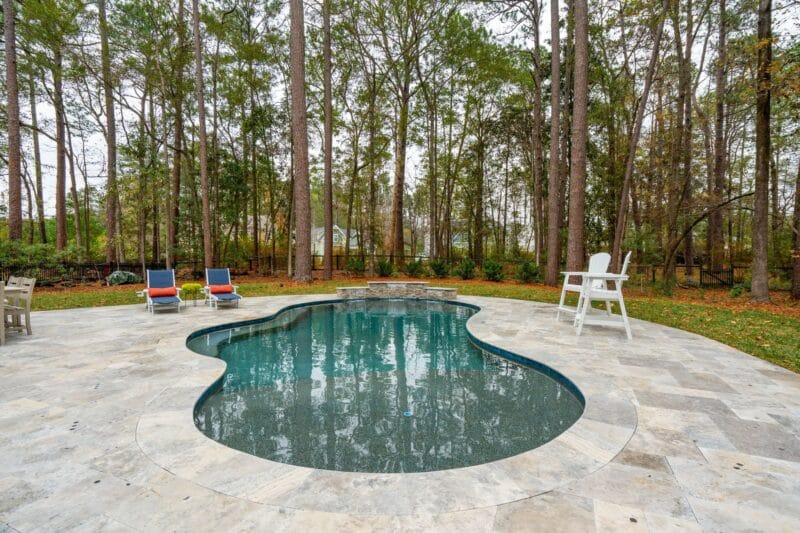
Because of the highly customizable nature of gunite pools, they’re often built in more steps than pre-fabricated modular pools. As such, some of the factors that can affect gunite pool construction timelines include:
- Weather and rain delays
- Permit or inspection timing
- Site access challenges
- Soil conditions
- Change orders or design revisions
- Availability of materials
- Construction of added specialty features like spas, waterfalls, fire bowls, or extensive decking
In other words, homeowners, delays don’t always indicate that something is wrong with your build. If anything, when you build a gunite pool, the pool construction journey will ebb and flow, yet be completed within the time your pool contractors quoted.
How to plan your gunite pool build
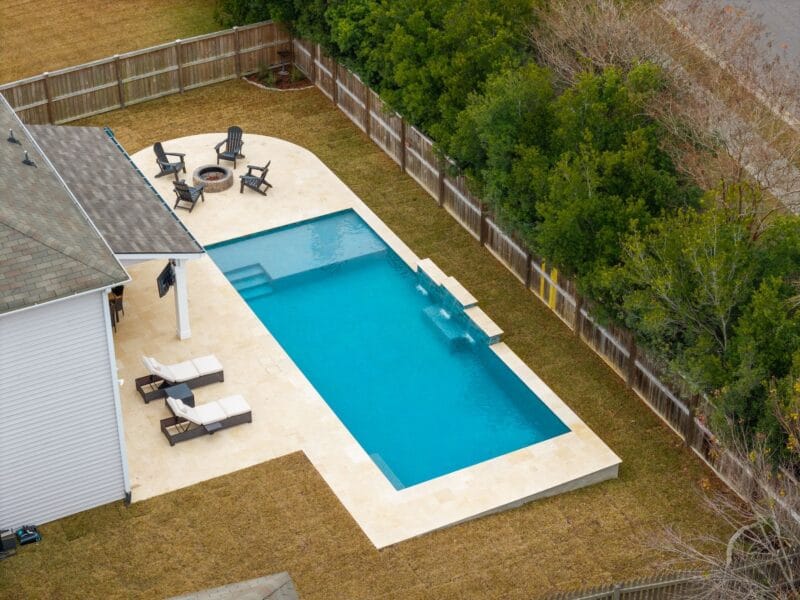
At this point, you might be asking yourself how do I plan my gunite pool build. What’s involved in the process? When should I start a new pool project?
Here are a few tips to help you make the entire project from start to finish smooth sailing:
- If you want your pool to be ready by summer, start earlier than you think you should.
- Budget time for design, approvals, construction, and final details.
- Avoid waiting until peak season, like June through August, to start planning your pool.
- Consider the type of landscaping and outdoor features that might complement your new pool, and the opposite is also true. Consider how your pool might complement your landscape.
- Determine whether you’d like to finance your pool. Many pool builders boast long-standing relationships with trusted lenders. Inquire about financing for your new backyard pool.
Did you know?
Did you know that the best part about working with a professional gunite pool builder is that your design team can create a one-of-a-kind pool that no one else has?
👉🏼Check out this full-length wall, four feet tall, with three waterfalls and a 10-foot-long fire burner.🏊🏼
It’s all about the building process. With gunite pool builders, you get flexibility in design to create a pool that perfectly fits your aesthetic and lifestyle.
Are gunite pools worth it, given their timelines?
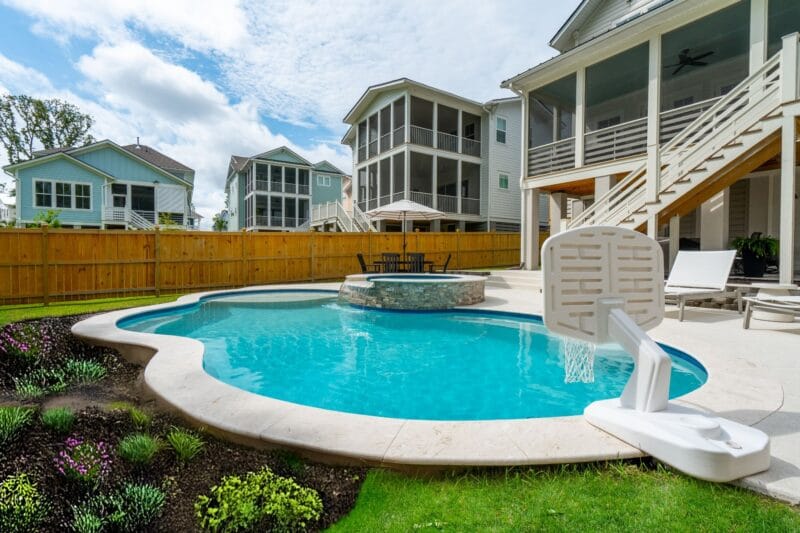
We think so, yes. Whether you’re opting for a cement, gunite, or concrete pool, the endless options for customization and longer timeline means greater long-term value of your pool.
Gunite and concrete pools give homeowners the greatest amount of design flexibility of any other type of pool (even more so than fiberglass or vinyl liner pools). While the process of gunite pool construction and installation may be longer than that of fiberglass pools or vinyl liner pools, they’re one of the longest-lasting pools on the market.
If cared for properly, your gunite or concrete pool may be the only pool you ever need to build in your lifetime. That’s how long-lasting and durable they are.
Plus, depending on your builder, you can have your gunite pool constructed in as little as 60 days. That’s how we operate here at Legacy Pools.
Our pool contractors have mastered the art of efficient, durable, and aesthetically pleasing luxury pool construction. We’ve built, maintained, remodeled, and repaired more than 1,500 pools in the Charleston, South Carolina region.
Lowcountry homeowners: If you’re thinking about gunite or concrete pool construction for your backyard, we’d love to hear about your project. We operate three convenient locations in the Greater Charleston area to better serve you.
To speak with a professional gunite specialist, contact us today. We look forward to helping you realize your vision.
Frequently asked questions (FAQ) about gunite pool construction timelines
1. How long does gunite pool construction take?
Gunite pool construction can take anywhere from 12-16 weeks and as little as 60 days, depending on site access, your outdoor living space, the application process, local building laws, and permits.
2. What are the stages of gunite pool construction?
The stages of gunite pool construction follow a step-by-step process that goes as follows:
- Pool design phase
- Pool excavation phase
- Steel, plumbing, and the initial electrical phase
- Gunite phase
- Tile and coping phase
- Plaster and the final electrical phase (for example, checking all electrical conduits and more)
- Decking phase
- Starting up the pool
3. When should I start planning a gunite pool?
Generally, you should start planning your gunite pool as far away from peak pool season as possible. Starting during winter or in early spring is ideal, but no later than February.
Legacy Pools: Beautifying the Lowcountry, One Backyard Pool at a Time