
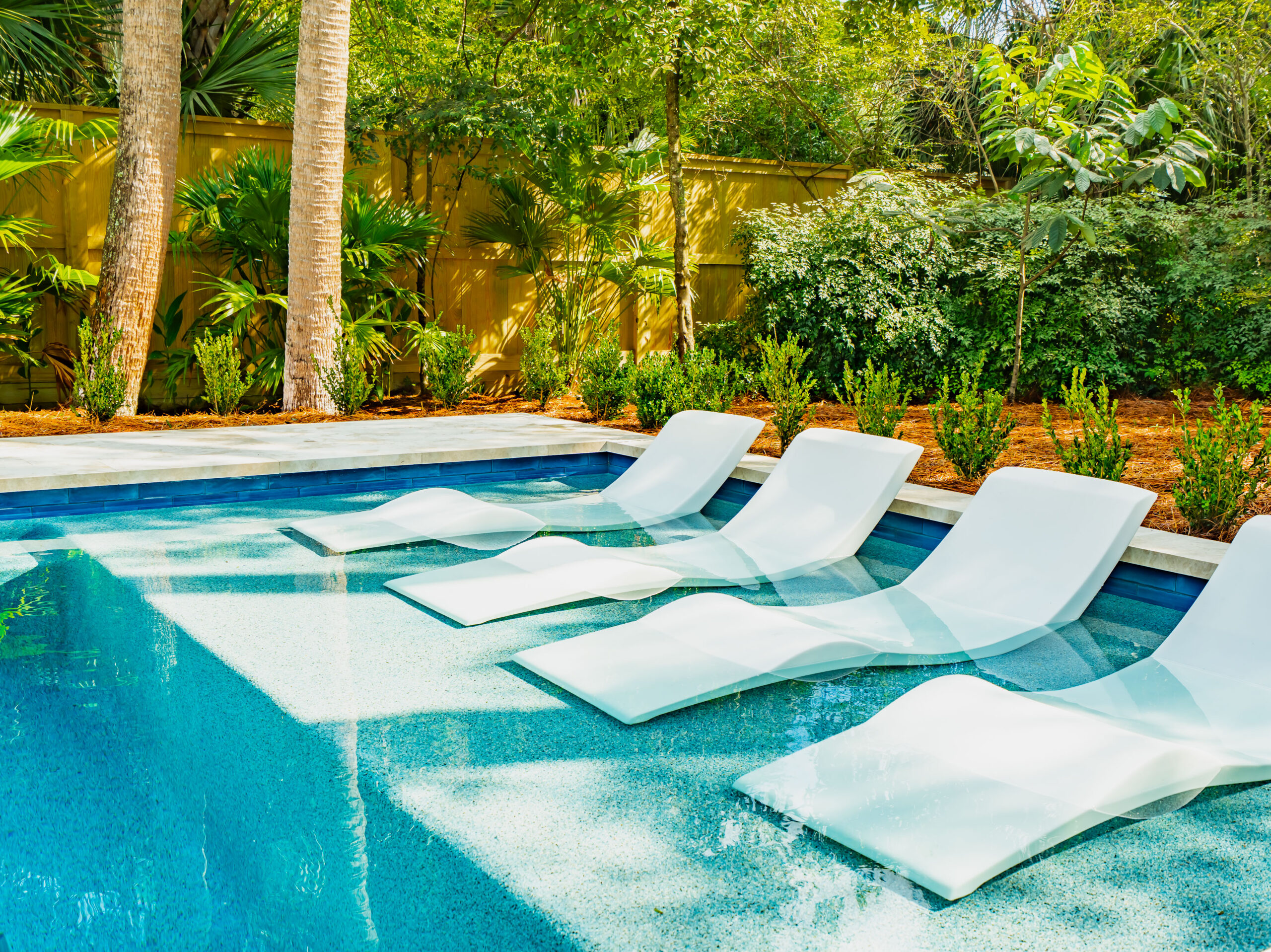
Gunite versus fiberglass pools: If you’re thinking about building a new backyard pool, you’ve likely heard of two custom pools and construction techniques:
- Gunite, concrete, or shotcrete pools
- Fiberglass pools
Gunite pools tend to last longer and are more customizable, but they tend to take longer to build. On the contrary, fiberglass pools are pre-manufactured, but often require more maintenance and don’t last as long.
So, which do you choose? And if you’re thinking about a new pool for your backyard, what do you need to know to make a more informed decision?
Legacy Pools here: Our pool builders in Myrtle Beach and Columbia have built more than 1,000 pools across the tri-county area. When it comes to pool construction, we’ve seen everything under the sun..
To make your life easier — and to ensure a smooth, swimmingly successful installation — we’ve created this short overview of gunite and fiberglass pools. If you’re thinking about building a backyard pool, you’ve come to the right place.
Join us as we explore some of the similarities, differences, advantages, and disadvantages of gunite and fiberglass pools, and a handful of the most frequently asked questions our clients have fielded our way. Grab your favorite beverage, because this is what you should know about gunite versus fiberglass pools.
What are gunite pools?
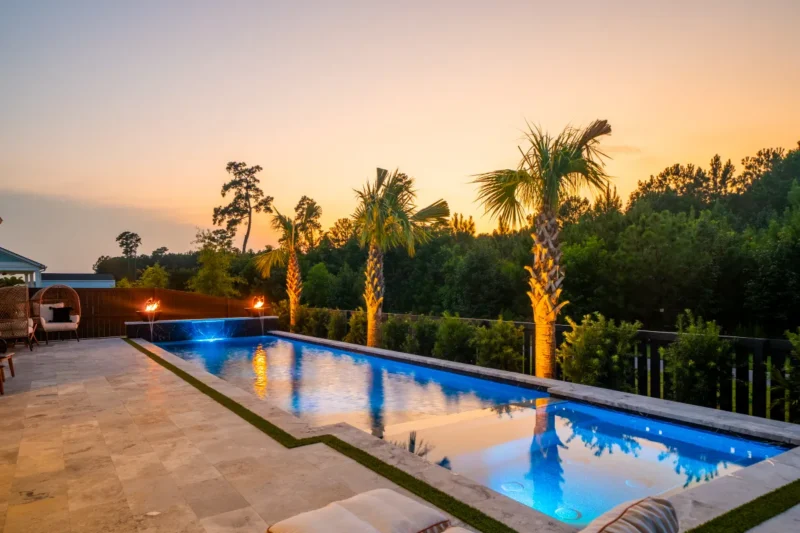
To give you a better understanding of what to expect when building a new backyard pool, gunite pools are an inground swimming pool made of either concrete or shotcrete, a mixture of either dry or wet sand, water, and cement.
Known for its strength and durability, gunite pools are dependable, long-lasting, and easily customizable for all backyard types. They can be designed and tailored as large, deep, and wide as you’d like.
As part of a gunite construction timeline in Columbia, SC, for example, you can expect your pool contractors to spray the gunite mixture on rebar using a high-pressure hose. While every pool timeline is different, our pool contractors can, for example, have your pool excavated, shaped, built, and swim-ready in a matter of just 60 days.
What are fiberglass pools?
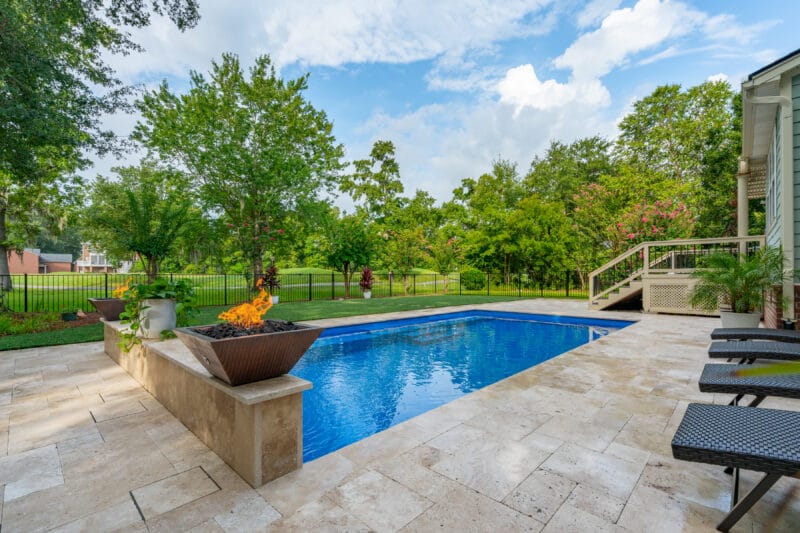
In contrast to gunite pools, we have fiberglass pools. Of the two pool types, the installation process tends to take less time.
Fiberglass pools are pre-constructed and built using a sturdy fiberglass shell built with a gel coat covering. These pools are built as inground pool options, but above-ground pool options also exist.
While gunite pools are fully customizable, fiberglass pools are built off-site, usually at a manufacturer’s facility and, therefore, delivered as a complete unit. Because fiberglass pools come in pre-made molds, shapes, and sizes, they’re designed for prospective pool owners who are looking for quick install times and shorter project timelines.
Advantages and disadvantages of gunite pools
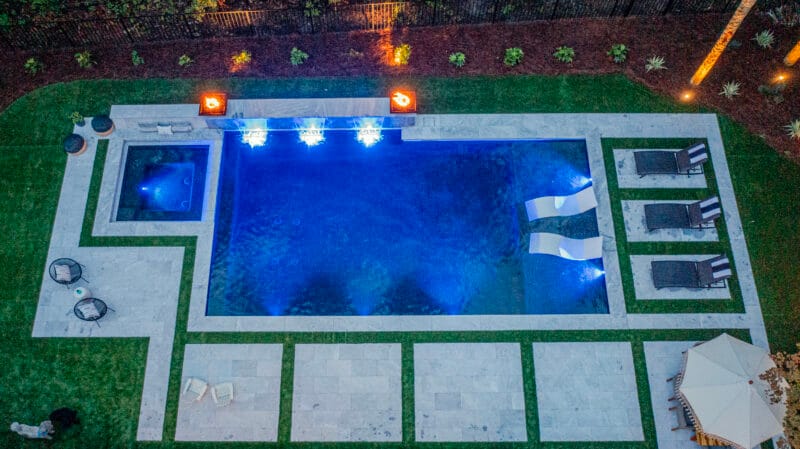
What makes gunite pools so advantageous are the freedoms to design and build exactly what you had in mind. We love them because of how durable they are.
- Customization options: Gunite pools allow homeowners to enjoy a fully customizable design that’s built according to homeowners’ specifications (size, shape, depth, finish styles, and add-on pool features).
- Luxury pool features: With custom-built gunite pools, you can add everything from custom pool lighting to fire features and feature walls, spillover spas, sun shelves & tanning ledges, and waterfalls & sheer descents. The sky is the limit when it comes to add-on pool features.
- The longest-lasting pool: Compared to fiberglass and vinyl liner pools, gunite pools offer some of the longest-lasting pools. A well-maintained gunite pool can last 50 to 100 years or more.
Some of the disadvantages of gunite pools include the fact that they tend to require a higher upfront investment because they are built on-site by skilled gunite specialists. Because of the technical nature of gunite pool-building, they tend to take longer to build than fiberglass pools.
Nevertheless, when planned in advance, pool builders can help you get started on a new gunite pool earlier so that it can be ready in 60 days. To make this timeline more concrete (pun intended), if you plan in spring, you can be swimming by summer or sooner.
Disadvantages and advantages of fiberglass pools
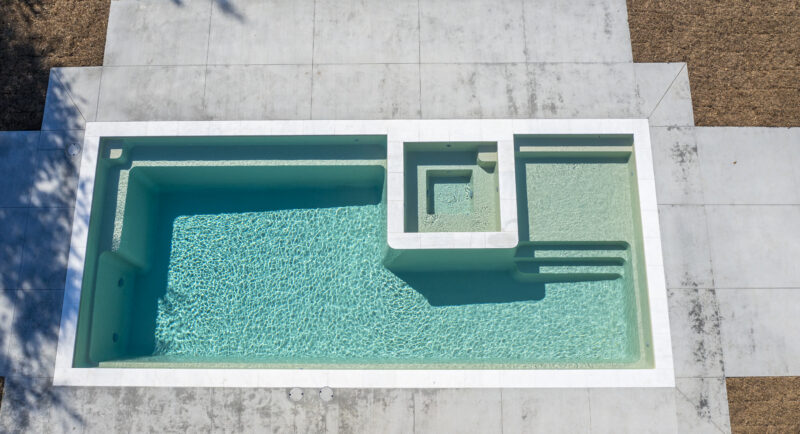
Compared to gunite pools, fiberglass pools are manufactured off-site at a manufacturer facility. The advantages of building a fiberglass pool include the following:
- Lower initial cost: Fiberglass pools often require a lower upfront investment than gunite pools.
- Faster installation: Due to the fact that fiberglass pools are pre-manufactured by pool manufacturers, all that’s needed is a crane to lift and lower the fiberglass pool shell into a pre-excavated hole in the backyard; fiberglass pools typically install faster than gunite pools.
While the pool may require a lower initial upfront cost and faster installation, disadvantages do exist, such as:
- They’re less customizable: Fiberglass pools are hard to customize because they come in fixed shapes and sizes per factory-molded designs. As a result, homeowners looking to customize their pool will have to opt for gunite pools, as fiberglass pools tend to be more limited in that respect.
- They tend not to last as long as gunite pools: Unlike gunite pools, the lifespan of the pool may be shorter.
Though the ability to customize and add designs and features is somewhat limited, it’s a great alternative for homeowners looking for a pool that installs fast and doesn’t require as much time to get up and running.
Table: Key differences between gunite versus fiberglass pools
| Characteristic | Gunite pools | Fiberglass pools |
| Customization | 1. Since gunite is sprayed on-site over a rebar frame, you can pretty much build whatever shape you can dream up: freeform lagoons, geometric modern designs, you name it. 2. Built-in spas, tanning ledges, and other custom features can be added during construction, no problem. | 1. You’ll choose from a manufacturer’s pre-built mold, so your shape and size options are limited to what’s already been engineered at the factory. 2. Most manufacturers offer dozens of models, giving you a few selections to choose from. |
| Durability | 1. Once cured, gunite is tough as nails and holds up well with use. 2. The structure itself is built to last, though the surface finish will show wear before the shell does. | 1. Fiberglass is strong and naturally flexible, so it resists cracking better than you might expect. 2. It can still crack if the ground shifts underneath it or if the install wasn’t done right. 3. The gel coat can fade or blister with age and sun exposure. |
| Installation timeline | 1. Most gunite builds run 8 to 16 weeks from permits to first swim, since the shell has to be sprayed, cured, and finished in stages. 2. Our pool contractors in Columbia and Myrtle Beach can take you from dig to swim in just 60 days. 3. Weather and curing time are the largest factors that can extend timelines. | 1. You can go from dig to swim in a month or so. |
| Maintenance | 1. The surface is porous, so it needs more brushing and more chemicals to keep algae at bay. | 1. The smooth, non-porous gel coat resists algae and stains, which means less scrubbing and fewer chemicals overall. 2. The gel coat ages, so you’ll likely have to invest in maintenance at some point. |
| Design flexibility | 1. Any depth, shape, and add-on feature can be worked into the design. 2. Gunite pools are great options if your yard has an odd shape or slope you’re trying to build around. | 1. You’re working within a list of pre-set shapes and sizes, so there’s less room to be creative with design. 2. Tight or oddly-shaped yards can also make transporting the pool shell a challenge. |
| Surface materials and feel | 1. Finished with plaster, pebble, quartz, or tile, gunite pools often give backyards a luxury, resort-style feel. | 1. The gel coat is smooth from day one, but can eventually dull or stain with age. |
| Overall lifespan | 1. Gunite pools last 50 years or more when built and maintained right. | 1. Most fiberglass pool shells last 25 to 30 years when built and maintained right. |
| Repairs | 1. Resurfacing a gunite pool every 15 to 25 years can run anywhere from $10,000 to $25,000, but this cost depends on several factors such as the size, shape, dimensions, and type of pool you own. | 1. Gel coat refinishing typically costs about $6,000 to $10,000 every 15 to 20 years, but this cost depends on several factors such as the size, shape, dimensions, and type of pool you own. |
| Cost considerations | 1. Gunite pools cost anywhere from $50,000 to $120,000+ depending on the size and custom add-on features. | 1. Fiberglass pools typically run anywhere from $45,000 to $100,000+ depending on the size and shape of the pool. 2. Maintenance tends to be less. |
| Overall resale value & appeal | 1. Buyers in the market for a higher-end home tend to see a well-designed gunite pool as a genuine luxury feature that adds value to the property. | 1. Fiberglass pools tend to appeal to markets where buyers appreciate lower pool maintenance and upkeep. |
Pool construction tip #2: Non-traditional pool shapes
Considering a pool that isn’t a classic rectangle? If you’re thinking about a non-traditional, free-form pool, have you considered bullnose coping?
Bullnose coping allows for smoother, rounded edges to the top rim of a swimming pool to help improve safety and comfort for swimmers.
Curious to see what it looks like?🤔
👉🏼Watch Ben as he shows you what bullnose coping does for this beautiful South Carolina free-form pool.🏊🏼
Get a complimentary estimate on a new backyard swimming pool
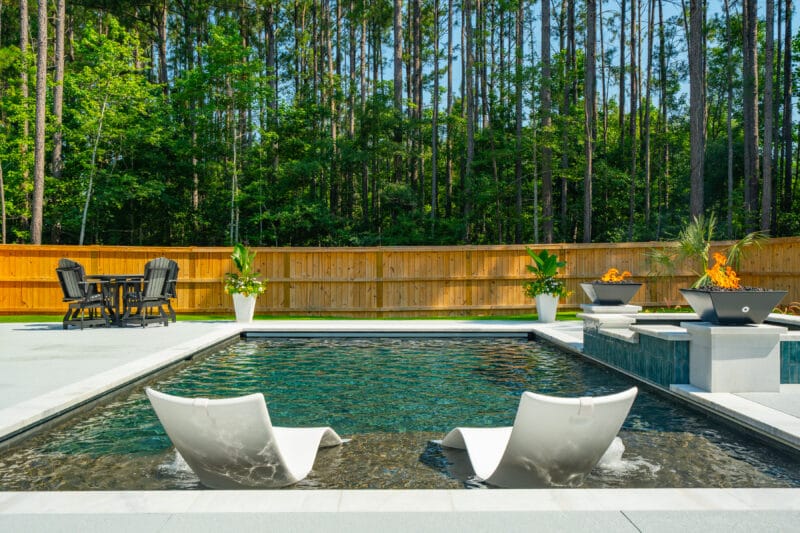
In our opinion, gunite pools offer the best value, that is, for homeowners looking for resort-style luxury and unparalleled craftsmanship & durability. If you happen to live in the South Carolina or Georgia area, we’d be happy to walk you through your options.
Our pool contractors in Columbia and Myrtle Beach have decades of experience designing, building, and maintaining pools of all shapes and sizes for homeowners across the South.
Locally owned and operated, and native to South Carolina, our pool contractors are all about helping you and your loved ones make cherished memories poolside for decades to come. So, if you’re looking to build a new pool — or looking for information about building a new pool — we invite you to get in touch with us.
For a complimentary estimate on a new luxury backyard swimming pool, please contact us today. We look forward to helping you build the pool of your dreams.💧
Frequently asked questions about gunite vs. fiberglass pools
1. What is the best inground pool for the money?
The answer depends on your goals.
- Are you looking for a pool that’s fully customizable, durable, and long-lasting?
- How much maintenance do you envision investing in your pool?
- Would you prefer a pool that installs more quickly?
- Would you prefer the standout features of a gunite pool or the lower maintenance of a fiberglass pool?
The best inground pools are often subjective to a homeowner’s needs, budget, and outdoor lifestyle. Your local, trusted pool contractor can help you parse out which option is best for you.
Depending on the answers to the following questions, the best inground pool for the money is the one that best meets your overall needs.
2. What are the pros and cons of gunite pools?
The pros of owning a gunite pool include:
- Complete freedom to customize your pool as you see fit
- It’s the longest-lasting, most durable pool type on the market
- You can customize with added, luxury pool features designed for modern outdoor living
The cons of owning a gunite pool include:
- It requires a higher initial upfront investment
- It tends to take longer to install than fiberglass pools
3. What are the pros and cons of fiberglass pools?
The pros of owning a fiberglass pool include:
- Fiberglass pools are known to be some of the fastest installing pools on the market.
- Fiberglass pools are also known for requiring less maintenance than gunite pools
- Choosing a fiberglass pool requires selecting the right pre-fabricated shell and having it installed in your backyard
The cons of owning a fiberglass pool include:
- They’re not as long-lasting as gunite pools.
- Limited customizability exists
- Their fixed shape and size, due to factory-molded designs, can be a barrier for those looking to customize their pool
4. What designs and shapes are available for gunite and fiberglass pools?
With gunite pools, the sky’s the limit. Gunite pools are the best when it comes to shape; if you can dream it, you can design it.
With fiberglass pool designs, you can expect to choose from rectangular, circular, and free-form pool shapes.
5. How long do gunite and fiberglass pools last?
Gunite pools tend to last for about 50 years or more, whereas fiberglass pools tend to last 25 to 30 years or more. With the right care and maintenance, both pool types can last for decades.
6. What happens to a fiberglass pool after 25 years?
In general, after 25 years, a well-maintained fiberglass pool may remain structurally sound, but the gel coat finish may start to fade, chalk, or show signs of wear and tear. Conducting professional pool resurfacing can help it last longer.
7. What steps are involved in building a custom backyard pool?
Whether building a fiberglass or gunite custom backyard pool, the process tends to look a little like this:
- Design and site planning
- Excavation
- Gunite pool installation or fiberglass pool shell installation
- Plumbing and electrical rough-in
- For gunite pools only, spraying the gunite and allowing it to cure
- Tile, coping, decking, and interior finishes
- Pool start-up, equipment checks, final walkthroughs, and pool school
☀️Legacy Pools: Transformative Pools Built for Luxury Outdoor Living💧