
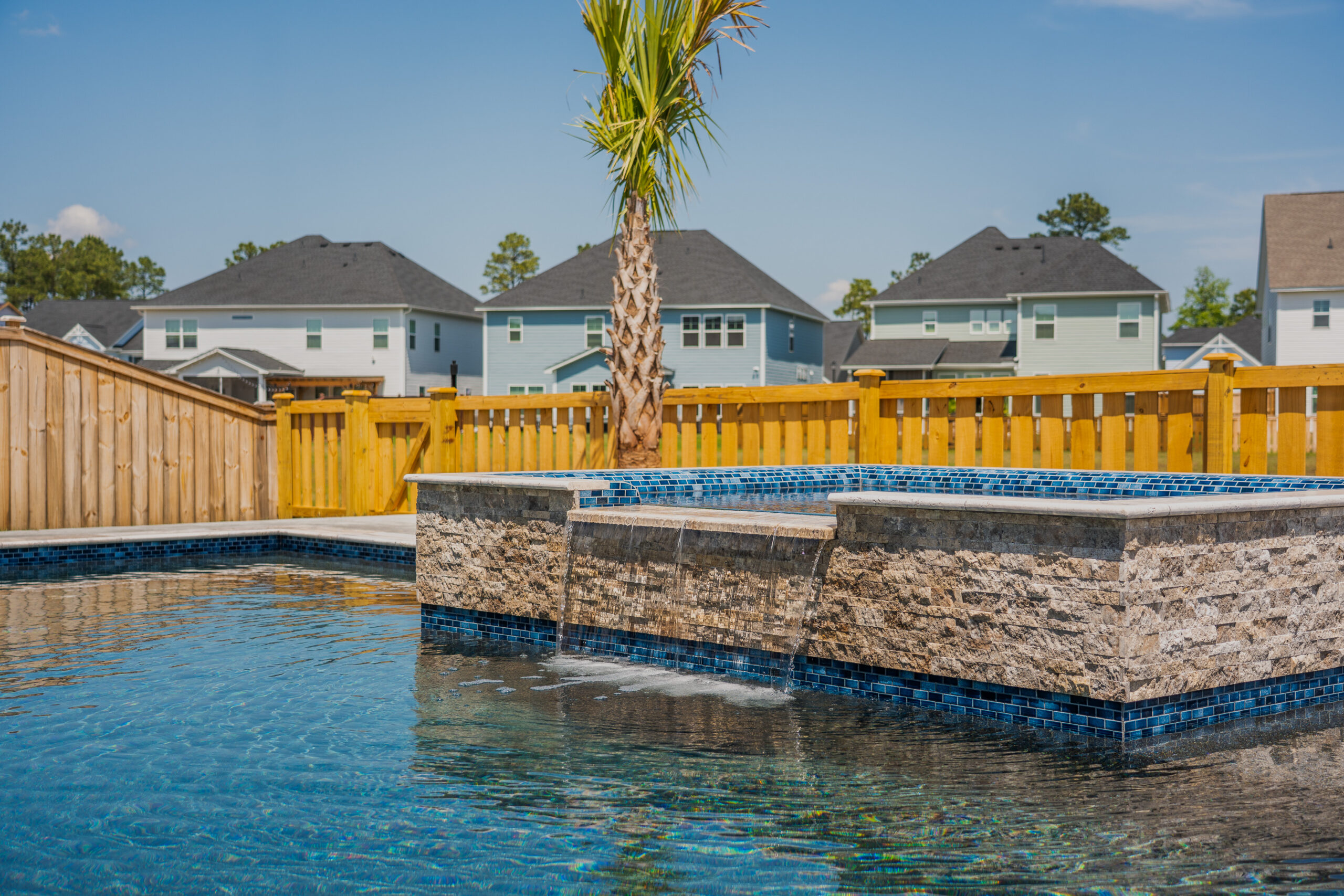
Cracks, rough-textured spots, discoloration, and wear & tear: These are a handful of the tell-tale signs that your swimming hole could use resurfacing. You can thank pool resurfacing for the look, functionality, and safety of your swimming pool.
Without a timely resurface, you’re liable for further damage, money, and time spent fixing up your pool. But with a proper resurface and replaster, you can ensure a longer-lasting pool that feels as good as it looks.
Legacy Pools here: We’re South Carolina’s go-to pool construction and pool remodeling team. We’ve helped build and restore the pools in over 1,500 South Carolina backyards.
After building thousands of pools, we felt we can provide a helpful resource about swimming pool resurfacing. If you’re thinking of resurfacing your pool, we’re here to help!
In this guide, we’ll walk you through what swimming pool resurfacing is and the following related topics:
- Why pool resurfacing is so important
- Key signs that indicate that a pool needs resurfacing
- What’s involved with the resurfacing process?
- Common pool resurfacing materials
- Cost of resurfacing a concrete or gunite pool
- The benefits of hiring a pool resurfacing professional
- Where to find quality pool resurfacing services and professionals if you live in South Carolina
What exactly is pool resurfacing?
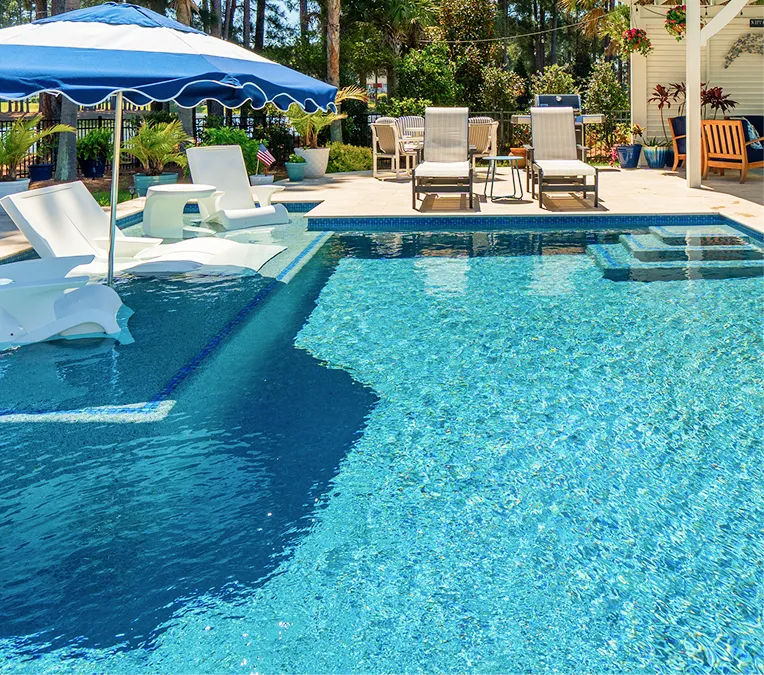
That’s the million-dollar question. Pool resurfacing involves renewing or replacing the surface layer of a swimming pool for the purposes of refreshing the look and feel of the pool. Since chemicals, water pressure, and natural elements can take a toll on a pool over time, resurfacing is a smart way to fix cumulative damage that can occur on the pool’s surface.
Resurfacing is different from replastering, though. Replastering involves removing layers of the pool, whereas resurfaces are about adding new surface layers.
The process of resurfacing a pool ultimately helps update a pool’s appearance, as well as make it safer, more functional, and more comfortable.
Why is resurfacing important for backyard pools?
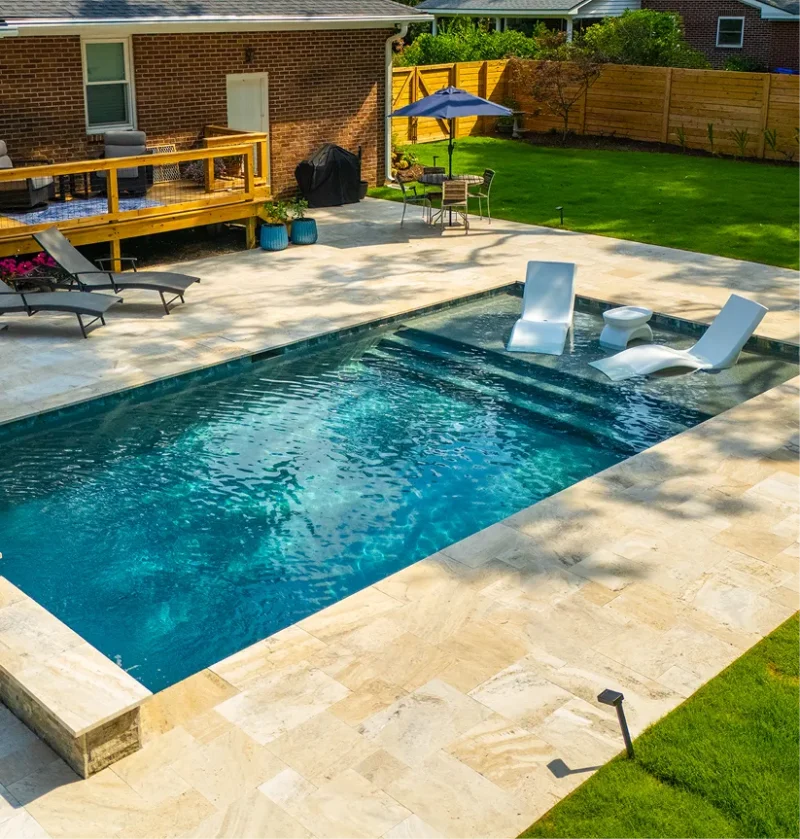
Resurfacing a pool is especially important because it helps give your pool a fresh new look, helping it go from stained, discolored, and rough to good as new.
What’s more, resurfaces can also help provide several structural benefits, such as preventing cracks and other surface-level damage, like water leakage. By fixing structural issues early, you can enjoy the modern look of a new pool.
Also, resurfacing is important for safety. For example, swimming pools with rough surfaces can be uncomfortable and can hurt little ones’ feet and hands. A pool resurface that provides a smooth, non-slip finish can help create a safer swimming experience for all individuals involved.
Finally, proper pool resurfacing can extend the life of a pool. By renewing the surface of a pool, you can ensure your pool stays in working condition for years to come.
4 Key signs your pool needs resurfacing
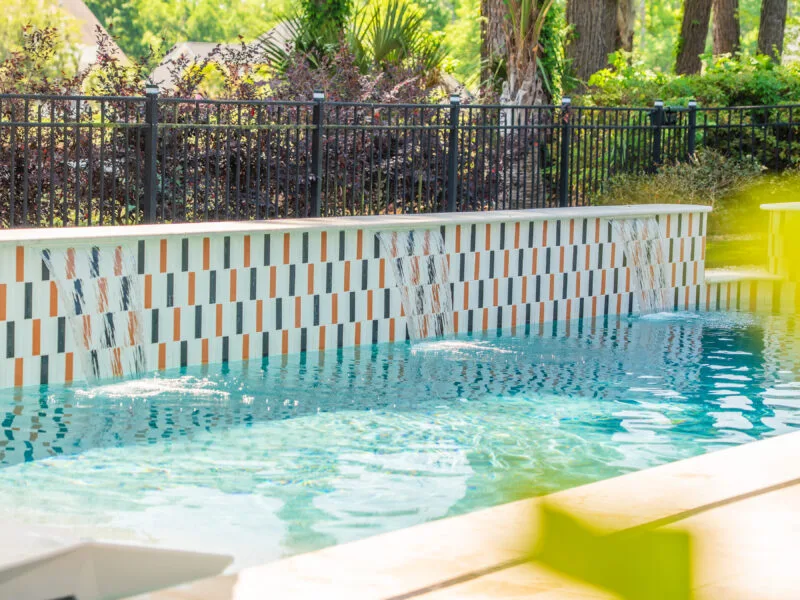
Pool owners: If you’re wondering whether your pool needs resurfacing, you should keep your eyes peeled for the following four tell-tale signs:
- Cracks or leaks: If you notice that the water level of your pool is lower or not at an optimal levels, you may need to resurface your pool. Small cracks in a pool may also indicate the need for resurfacing.
- Rough spots: If you notice rough spots in your pool, you may need a resurface. The reason is that dirt and algae can burrow their way into cracks and peeling edges of a pool, which can be both a health and safety risk for swimmers.
- Algae: Algae tends to build up in rough areas of a pool. If, after cleaning a pool, the resurfacing can provide a smoother surface that will help minimize algae growth.
- Discoloration and stains: Sometimes, pools will become discolored or stained because they’re old and outdated. A pool resurface can restore the luster of a pool’s surface by removing previous discolorations and stains.
What’s involved with the resurfacing process?
If you’re embarking on a pool resurfacing project, your new finish will go through the following steps:
- Preparing the site: First, your pool professional will drain the pool and clean the surface. They’ll also clear debris, inspect the surface, and assess the condition of the pool.
- Remove the existing surface: Your pool care team will sand, hydro-blast, or remove old surface material. Removing the existing surface helps ensure stronger material bonding.
- Applying coating: Applying a bond coating helps ensure that the new finish adheres properly to the pool’s surface.
- Adding the new resurfacing materials: Plaster, quartz, exposed pebble, and other materials are then applied. When adding new resurfacing materials, multiple coatings are needed to achieve the right finish and texture. The final finish will provide the pool with a fresh, smooth surface.
- Allow time for curing and refilling the pool: After the new surface is applied, the pool must cure for a few days to allow it to settle and bond. Once the curing is complete, the pool is refilled with water, and then, it’s swim-ready.
You can find timelines below for pool resurfacing projects of different kinds.
| Resurfacing stage | Typical time needed | Description |
| Drain the pool | ½ to 1 day | Existing pool water is removed |
| Surface preparation | 1-2 days | The old or damaged pool surface is prepared for resurfacing |
| Repairs and preparation work | 1-3 days | Cracks, damaged plaster, tile, and other areas are repaired |
| Apply the new surface to the pool | 1-2 days | New resurfacing material is applied. |
| Initial curing and finishing | 1-3 days | The new surface is left to set according to material requirements. |
| Refill the pool | 1-2 days | The pool is filled with water to protect the new finish. |
| Startup and balancing water chemicals | Several days | Water chemistry is adjusted, and the new surface is brushed as recommended. |
| Plaster resurfacing | 5-7 days total | Requires the least amount of time of the below-mentioned options. |
| Pebble or aggregate resurfacing | 7-10 days total | These finishes may require additional steps. |
| Resurfacing projects that are larger or more involved | 10-14+ days total | Factors such as weather, the amount of repairs conducted, site access conditions, and tile work can affect this timeline. |
Common pool resurfacing materials
When resurfacing a gunite or concrete pool, your options can include:
- Plaster: Plaster is affordable and smooth but often is prone to staining.
- Quartz: A more solid material that comes in different colors
- Glass beads: A smooth, luxurious finish that resists algae
- Pebble finishes: Durable and non-slip, they’re ideal for people who enjoy entertaining and use their pool often.
Your pool professional can walk you through pool refinishing options to help you decide which materials are best for you.
Cost of resurfacing a concrete pool
When considering the cost to resurface a pool, giving a firm price can be challenging. Factors such as the size of the pool, materials chosen, and labor expenses can affect the total cost.
On average, resurfacing a pool tends to cost anywhere from $6,000 to $15,000, depending on the size of the pool. This dollar amount takes into account:
- The type of pool you’re resurfacing
- The size of the pool
- The finishes chosen
- Painting
- The cost to refill the pool
- Available add-ons and upgrades
The benefits of hiring a pool resurfacing professional versus doing it yourself
When the time comes to resurface your pool, one of the decisions you’ll have to make in the pool resurfacing process is whether you choose to do it yourself or have the work completed by a professional.
Many people opt for the expertise and experience of a pool professional because they’ll handle all aspects of the resurfacing job before, during, and after the process. A professional can also help recommend the best materials for your pool type.
Finally, professionals can also complete jobs faster, with fewer risks, and with trusted tools.
Pool remodeling tip #1
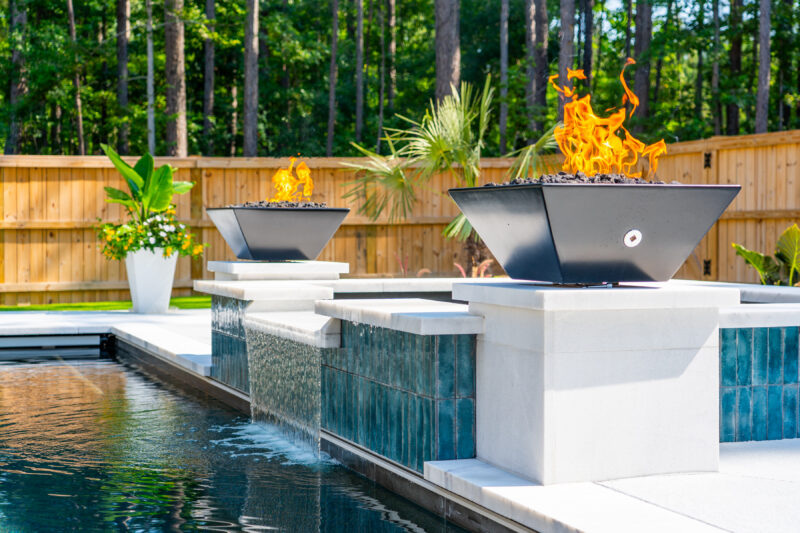
Did you know that you can add glass tile along the edges of steps to give them a clean, finished look? Consider adding tiling and coping with your next resurface or replaster job.
To see how glass tiling works with a finished pool, check out our Instagram page here. 👈🏼
Need pool resurfacing in South Carolina?
Homeowners: If you’re thinking about protecting the longevity and durability of your pool area, pool resurfacing and/or replastering could be in your future. Whether you’re hoping to restore old surfaces to good as new, or whether you’re looking to give your pool a visual refresh, investing in pool resurfacing can help you accomplish both.
If you live in South Carolina, can we help? Our Legacy Pools team has worked on Lowcountry backyard pools of all different shapes and sizes. Whatever material you choose, we help South Carolina homeowners spruce up their backyard pools with pool surface refinishes that last for years.
Whether you own a gunite, shotcrete, or concrete pool, we can get the job done right, the first time. If you’re looking to get rid of rust stains or cracks in the pool, we invite you to get in contact with our luxury pool contractors.
To schedule a consultation or get in touch with our Myrtle Beach or Columbia-based team, contact us today.
Frequently asked questions (FAQ) about pool resurfacing
1. What is the average cost to resurface a pool?
The average cost to resurface a pool is about $6,000 to $15,000 depending on the size, type, materials, and modifications needed.
2. How often should a pool be resurfaced?
A pool should be resurfaced about every seven to 10 years.
Nevertheless, this number depends on the type of surface material you’ve chosen, as well as how you balance your pool chemistry. Plaster-based or cement-based pools need to be resurfaced every three to seven years.
Nevertheless, you should always check with your pool professional, as they’ll have the knowledge to assess to what extent your pool needs to be resurfaced.
3. What time of the year is best to resurface a pool?
The best time of the year to resurface a pool is often during seasons with mild weather. Fall and spring are ideal here in South Carolina.
Ideally, you want the weather to be anywhere from 50°F to 75°F. Planning a pool resurface during mild weather can help prevent new plaster or finishes from cracking or drying faster than needed.
4. What’s the difference between pool resurfacing versus replastering?
The largest difference between pool resurfacing and replastering involves the method of removing and reapplying finishes to a pool’s surface. With pool resurfacing, a pool contractor removes the top layer of a pool and reapplies a finish to the pool’s surface.
After hydro-blasting away the existing layer and sandblasting the underlying surface to smooth it, a new finish can be added. After the new finish is added, you can use your pool in about five to 14 days.
Pool replastering involves removing the bottom plaster layer of the pool and replacing it with a new plaster surface layer. The largest difference between pool resurfacing and pool replastering is the fact that pool replastering is more involved.
5. How long does resurfacing a pool take?
Resurfacing a pool can take anywhere from five to 14 days. Nevertheless, the condition and size of the pool, not to mention the weather, can affect the time needed to resurface a pool.